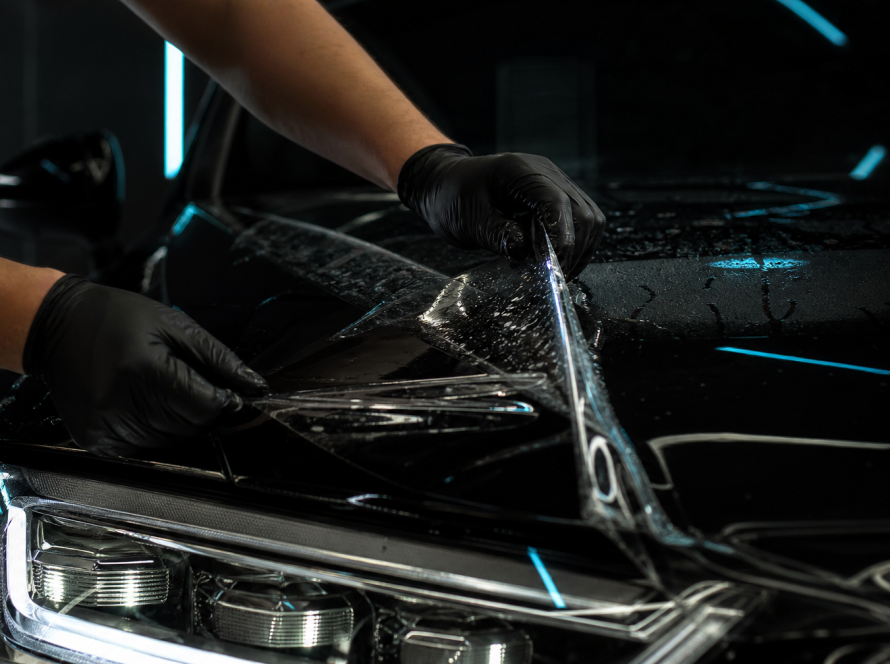
You installed a flawless PPF last week. The job turned out perfectly. But when the BMW 7 Series customer asked about the price, he froze and walked away.
The problem wasn't the price. It was the sale.
Selling PPF to premium customers is a skill distinct from installation. These buyers do not make impulse decisions, do not shop around for the lowest price, and are not swayed by catalogs. They buy when they trust the professional, understand the return on investment, and feel that they are being served at a level commensurate with their standard of living.
This guide shows you exactly how to do that.
Why Do Premium Customers Shop Differently?
A customer who has just purchased a Porsche Cayenne for R$ 600,000, a Mercedes GLE, or a Lamborghini Urus isn't comparing prices. He is evaluating trust, exclusivity, and perceived value.
Four characteristics define the purchasing behavior of this profile:
1. He does his research before calling.The premium customer has already read about PPF, watched videos, and likely consulted with the dealership salesperson before contacting you. His inquiry isn’t to find out what PPF is—it’s to assess whether you’re the right professional for the job.
2. He buys with his eyes and his emotions, then rationalizes his decision.His first impression of your space, the way you speak, and the quality of the photos you show him matter more than any technical argument.
3. He doesn't compare prices with the cheapest competitor.High-end customers compare experiences. If your service seems more expensive than the one at the corner garage, that's an advantage, not a problem.
4. A referral is worth more than any ad.When a member of the car club recommends your studio, the sale is 80% closed before the first contact.
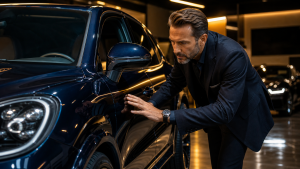
Get to Know the Product Before You Sell Anything
You can't sell PPF to premium customers without having a thorough understanding of the product. Technical uncertainty is immediately apparent, and a discerning buyer will interpret it as a red flag.
Points you need to answer confidently and naturally:
Differences between film thicknesses:6 mil (150 microns) vs. 8 mil (200 microns), the importance of the clearcoat layer, and self-healing technology.
Partial coverage vs. full-body coverage:Which areas are most vulnerable (hood, bumper, side mirrors, side-view mirrors, door edges) and why full-body coverage makes sense for high-value vehicles.
Warranty: What is the warranty for the PPF you use, what does it cover, and how do you file a claim?
Maintenance:What customers should and shouldn't do after installation, and how it affects their daily lives.
PPF + ceramic coating:how the two technologies complement each other and why applying a coating over the PPF is the most comprehensive combination for protection and ease of maintenance.
Without that knowledge, you aren't conducting a consultation—you're just answering a questionnaire.
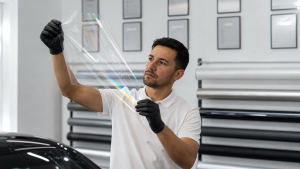
First Contact: How to Qualify and Build Rapport
That first contact via WhatsApp or phone is crucial. Professionals who jump straight to the price lose premium clients. Those who ask questions before responding establish credibility.
Qualification Schedule:
“Before I give you a price, tell me a little more about the car. What model is it? What color? And is it brand-new, or has it been used for a while?”
This question serves three purposes: it shows that the price depends on the actual work involved (it’s not an off-the-shelf product), it gathers information for a customized proposal, and it signals that you treat each case individually.
Information to gather during the initial contact:
Vehicle make, model, and year
Color (solid and pearl colors behave differently during installation)
Current condition of the paint (brand new or already in use)
Intended use (daily use, storage, long trips)
Have you used PPF before? What do you expect from the service?
Write down this information before the in-person appointment. Arriving with details about the customer’s car is a clear sign that they aren’t just another number in line.
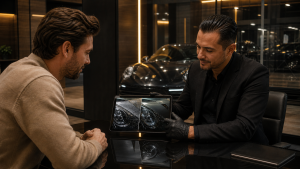
The Consultation: Sell With Questions, Not With Sales Pitches
The biggest difference between the average salesperson and the high-value consultant lies here: the consultant asks more questions than he makes statements.
Instead of just listing technical specifications, find out what the customer values:
“How many years do you plan to keep this car?”
“Has anyone ever scratched or dented one of your cars before?”
“Do you usually take long trips or drive a lot on the highway?”
“Are you thinking of selling the car someday, or are you keeping it?”
The responses reveal the exact selling point that will close the deal. Anyone who says, “I plan to keep it for 10 years” needs to hear about preserving the original paint and resale value. Anyone who says, “I’ve already scratched two cars” needs concrete data on abrasion resistance.
The consultation ends with you presenting the solution, not the price. The price is a consequence of a clear need, not the starting point.
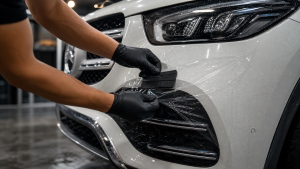
How to Present a Price Without Apologizing
Insecure professionals present the price with excuses: “It’s a little more expensive because…” or “The price turned out this way because…”
That's the right way to create room for negotiation.
How to present a figure with authority:
Always present the investment in context, never in isolation:
“For a Porsche 911 with this white paint job, full-body coverage with [PPF name] costs R$ [amount]. This includes installation, a [X]-year warranty, and guided maintenance for the first 30 days. Compared to a partial repaint, which costs between R$ 8,000 and R$ 15,000 if you get a dent or a deep scratch, the value is clear.”
A structure that works:
Show the full amount—don't hide it, and don't apologize
Put it in context by focusing on what he's protecting—the value of the vehicle, not the service
Show the cost of not doing it: repainting, loss of value, inconvenience
Round it off with a warranty, security, and post-installation support
Never mention a competitor’s price. If the customer brings it up, respond: “I understand. What I can guarantee is the quality of service you’ll receive here, with the PPF [brand], installed by [name/certification]. You can compare us once you see the results.”
The 4 Most Common Objections and How to Respond to Them
“It’s expensive”
This objection is rarely about money. Most of the time, the customer just hasn't seen the value yet.
Answer:“I understand your point. Can I show you what’s included in the price and why it’s at that level? I want to make sure you’re comparing the same level of service.”
Next, explain in detail what goes into the price: the film, skilled labor, the warranty, support, and the opportunity cost of not doing the project.
“I’ll think about it”
This is the most dangerous objection because it seems neutral, but it usually indicates a lack of urgency or clarity.
Answer:“That makes perfect sense. Is there anything I can help clarify before you make your decision? Are there any questions you still have?”
If the answer is “No, everything is clear,” create a real sense of urgency: “Just so you know, my schedule for the next [X] days is pretty full. If you want to secure the date, I can reserve it now with a small deposit and no commitment to a specific deadline.”
“A friend of mine recommended another, cheaper place”
Answer:“PPF comes in a wide variety of films, weights, and installation quality. Can I show you what sets what we use here apart and the results our customers have achieved? If you still want to compare afterward, that’s fine.”
Never attack the competition. Show your portfolio featuring vehicles similar to the client's.
“I need some time; I’m going to do some more research.”
Answer:“Great. I’ll send you a summary of our conversation, including the technical details of the film and the coverage, to make it easier for you to compare. Can I call you in [X days] to answer any questions you might have?”
This demonstrates organization, respect for the decision-making process, and paves the way for a structured follow-up.
Natural Upsell: From Partial to Full Body
Most customers come in wanting to protect the hood and bumper. Your job is to help them understand why full-body protection makes more sense for their needs, without pushing it on them.
The logic is simple: protecting 30% of the car while leaving the other 70% exposed to risks, rocks, and UV damage creates an imbalance that will become apparent in 3 or 4 years.
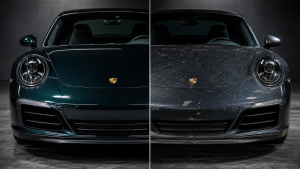
Visual argument:Show side-by-side photos of vehicles with partial coverage versus full-body coverage after 2 to 3 years of use. The difference in appearance between the protected and unprotected areas is the most effective argument there is.
Financial argument:
“The difference between the partial package and the full-body package is usually [X%] more in terms of cost. But if you compare it to the cost of having the side panels or side mirrors painted individually later on, it’s not worth splitting it up now.”
Convenience argument:The premium customer doesn't want to come back to the studio in two years to finish the service. Once. Done. Right.
Social Proof That Convinces Premium Customers
General reviews on Google aren't enough to close a high-ticket sale. Premium customers want to see vehicles similar to theirs being treated with the same care.
What works:
Portfolio organized by make and model:if a customer owns an Audi RS, show them the Audis you’ve already installed. Specificity builds immediate trust.
Video testimonials:A satisfied customer talking about the results while standing next to their own vehicle is worth more than any technical description.
Installation documentation:photos and videos of the entire process—from preparing the surface to the final touches—demonstrate care and professionalism.
Visible certifications:If you are a certified installer for well-known window film brands, this should be prominently displayed in your studio and on your online profile.
AtNevada Protection Films, all partner installers have access to marketing materials and technical support that help them establish this kind of authority in the local market.
The Environment Matters Just as Much as the Service
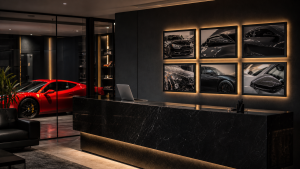
A customer who pulls up in a BMW or Land Rover is, whether they realize it or not, judging the environment where their car will be parked for one, two, or three days.
A cluttered space, poor lighting, and a neglected reception area make the customer feel like they’re in a place that doesn’t match the standard of their vehicle. It doesn’t have to be a dealership garage, but it does need to convey organization, cleanliness, and care.
Points to note:
A well-organized reception or check-in area:even if it is small, it should be clean and well-lit.
Installation area separate from the reception area:customers should not see any work-related mess when they arrive.
Neutral scent:Solvents and strong products give off a garage vibe, not that of a premium studio.
Visual communication:business name, certifications, and photos of completed projects displayed on the walls.
This set of signals conveys something that no sales pitch can: you’re on the same level as the customer’s car.
The PPF Brand You Use Is Part of the Sale
When a premium customer asks, “Which PPF do you use?”, the answer must be immediate, confident, and provided with context. The product name that comes out of your mouth at that moment carries the weight of the customer’s entire perception of quality regarding the service.
Working with a well-known brand that has a proven track record and genuine technical support isn't just a minor detail—it's part of the selling point.
What the Right Brand Brings to Your Business
Immediate credibility at the time of consultation.When you present a film with a formal warranty, traceability of origin, and technical certification, the customer understands that they are not purchasing a generic service. They are purchasing a system with a proven track record.
A warranty you can confidently explain.A premium customer won’t accept “we guarantee it” as an answer. They want to know: how many years, what’s covered, and how to file a claim. Reputable brands have this documented, and you explain it clearly. This eliminates objections before they even arise.
Sales support materials.Catalogs, technical data sheets, comparisons of weight per square meter, and real-world installation examples are tools that close sales. Brands that invest in installer support provide this arsenal of resources.
Differentiation from the lowest-price competitor. When a customer asks why you charge more than the neighborhood auto shop, the answer lies in the window film. “I use [brand], which comes with an X-year warranty, heat-activated self-healing, and factory-applied clearcoat” is a concrete selling point that a competitor using unbranded window film cannot replicate.
Why Nevada PPF is the choice of installers serving the luxury market
Nevada Protection Filmsis the official importer of high-performance PPF in Brazil, with a product line designed to meet the standards required by owners of high-value vehicles.
What sets Nevada apart in the market:
Self-healing technology:The film's surface repairs itself from superficial scratches using the sun's heat, keeping the vehicle's appearance flawless for years to come.
Formal, documented warranty:The partner installer receives technical support and documentation to provide to the end customer, with clear and traceable coverage.
Certified training:Nevada trains installers through its official training program, which covers system-based and utility knife cutting techniques that ensure a high-quality finish even on complex panels.
Installer support:marketing materials, technical data sheets, a care guide for customers, and sales support to close higher-value sales.
For professionals who want to sell PPF to the premium market without relying on price as a selling point, choosing the right supplier is just as strategic as ensuring the quality of the installation.
Would you like to learn more about the Nevada Partner Installer Program? Contact the NEVADA team to find out how to become a certified installer.

Strategic Partnerships with Dealerships and Retailers
The best source of premium customers isn't Google—it's the dealership salesperson who just handed over a new set of keys.
A customer who buys a car priced at over R$ 300,000 is in a state of euphoria and is taking great care of their new purchase. The right time to talk about PPF is precisely then—hours or days after delivery.
How to structure the partnership:
Talk to the dealership’s after-sales manager or F&I representative—not the salesperson directly. This professional already offers protection products and understands the concept of recurring revenue.
Create a simple presentation:a singlepage that outlines what you offer, the brands you work with, your guarantee, and an example of a result.
Offer direct commissionsfor closed referrals, with transparent tracking.
Treat the dealership salesperson like a customer:offer a complimentary gift, invite them to the studio, and provide an installation experience. Those who are familiar with the product recommend it with greater conviction.
In addition to dealerships, law firms, consulting firms, high-end gyms, and luxury gated communities are places where your premium clients frequent. A partnership with one of these venues can open up an entire pipeline of qualified referrals.

After-Sales: The Cycle That Generates Referrals
The sale of the PPF doesn't end with the installation. For premium customers, after-sales service is part of the experience that will determine whether or not they recommend the product.
An After-Sales Protocol That Works:
Personalized Care Manual:Provided in writing, it includes the customer’s name, the vehicle, and specific instructions for the installed film. This demonstrates professionalism and reduces future questions. (Nevada’s PPF Care Manual templateis an example of the standard that high-value customers expect to receive.)
Follow up within 7 days:a simple message asking if everything is okay and if they have any questions. This resolves issues before they turn into complaints and leaves a positive impression.
Check-in in 6 months:a reminder to have the car inspected, which can be an opportunity to take advantage of additional services (ceramic coating, polishing, maintenance).
Ask for a referral directly:“If you know anyone with a high-value car who wants the same level of protection, it would be our pleasure to serve them with the same dedication.”
Satisfied high-end customers refer other high-end customers. A well-executed after-sales service is the best sales funnel in this market.
Conclusion
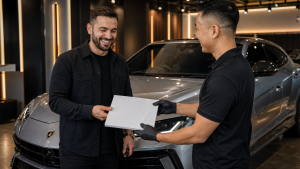
Selling PPF to premium customers isn't about having the most expensive product or the nicest shop. It's about operating with the same level of excellence that the customer expects for their own car.
Master the product. Guide the consultation with questions, not catalogs. Present the value without making excuses. Create an environment that lives up to the vehicle’s standards. And treat after-sales service as part of the overall service, not as an optional extra.
When you do all of this consistently, price ceases to be an objection. It becomes the natural result of a service that premium customers recognize as the standard they deserve.
Looking for the right film to provide this level of service?Nevada Protection Filmsis the official importer of high-performance PPF in Brazil, offering technical support, training, and support materials for installers serving the luxury market. Contact our team.