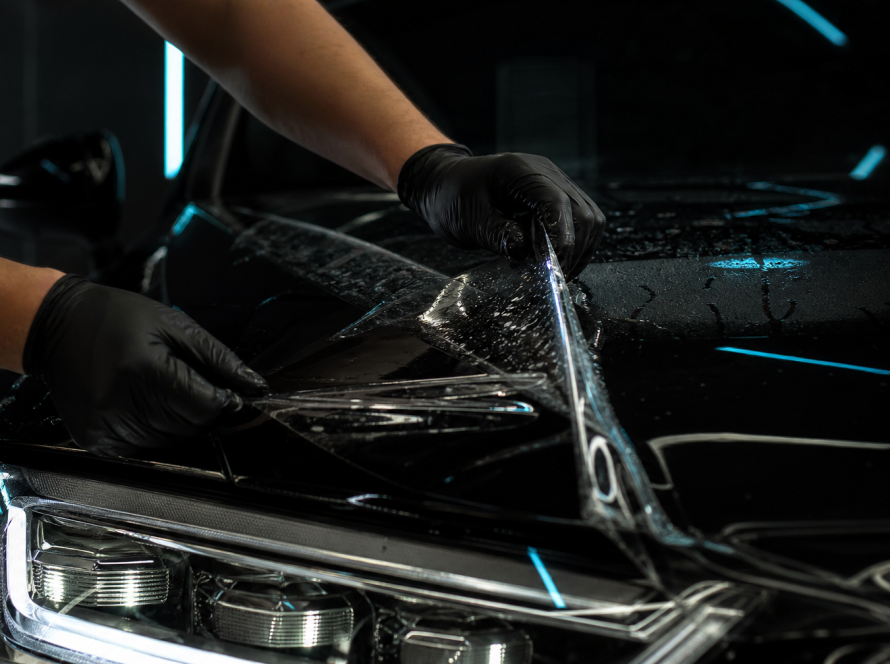
Choosing a PPF supplier based solely on the price per roll is a short-term decision with long-term consequences. When the film yellows, peels, or has adhesion issues, it’s your salon—not the manufacturer—that faces the end customer. A supplier that offers genuine technical support, a documented warranty, local inventory, training, and support materials shifts that risk to them. Without these, the risk remains with you.
The problem doesn't show up at the time of purchase; it shows up 12 months later
When you're shopping, every roll of PPF looks the same. It's transparent, has a nice liner, promises a long warranty, and comes at an attractive price.
The difference becomes apparent later, when the car returns to your shop with raised edges, yellowing on the white hood, or adhesive stuck to the paint when it’s removed. That’s when you find out who your real supplier is.
A widely discussed point in the market is simple: when you pay for PPF, you’re paying for the material, but also for the warranty and support from the seller. Film without a support structure leaves the installer on their own precisely at the most critical moment.
And there’s another factor that’s just as important: choosing the right installer and product is just as important as the price of the service. The same logic applies to those who buy the film to resell and install it: a cheap product that comes without support ends up costing more in the long run.

Who backs the guarantee you give the customer?
This is the key point that every beauty salon owner needs to understand.
When you deliver a car with PPF, you’re the one the customer associates with the warranty. If the film fails in 12 or 18 months, the customer won’t call the manufacturer. He’ll pull up in front of your shop and demand a solution.
Straightforward question: Right now, who's paying for the rework?
Does the supplier restock the items quickly?
Is there a written warranty with clear coverage and a claims process?
Does anyone respond to your service call right when you need it?
Or will you cover the costs of removal, a new film, the box being out of service, and a possible repaint all by yourself?
If the answer is the last option, you didn't buy cheap film. You bought a liability.
What Good After-Sales Support Needs to Deliver in Practice
Support isn't just a promise from WhatsApp. It's a system. Before signing a contract with a PPF provider, check these 7 points:
1. Documented and enforceable warranty
A verbal warranty is worthless when the customer returns. Insist on a written warranty that specifies the term, coverage (yellowing, delamination, cracking, bonding defects), and step-by-step instructions for filing a claim. Reputable brands often make the warranty contingent on installation by certified professionals, which demonstrates the importance the market places on traceability and training.
2. Local inventory and quick restocking
Every PPF supplier relies on imports, so the right question isn’t about inventory, but about stability. How many years have they been operating in Brazil? Do they have a track record of honoring warranties, active customers, and a solid reputation in the market? A supplier with years of experience, a network of installers, and a well-established presence won’t disappear when a defective batch arises.
3. Technical installation support
Questions about tension in a complex bumper, an edge that doesn’t fit properly, or how the film behaves in cold or hot weather. A partner supplier has a technical team that provides solutions, not just a generic manual in English.
4. Training and Certification
Even high-quality film can lead to rework if installed by someone without the proper technique. Suppliers who invest in training protect their own brand and safeguard their operations. Training in cutting techniques—using both the system and a utility knife—as well as paint preparation and finishing, makes a direct difference in the return rate.
5. Sales Support Materials
Catalog, product specifications, weight comparison chart, and care instructions to give to the end customer. This material helps drive sales of higher-value packages and reduces price objections during consultations.
6. Brand continuity in the country
Opportunistic brands enter the market with aggressive pricing and disappear within months. If that happens, who will honor the 5- or 7-year warranty you promised your customer? A local presence, track record, and commitment to the market are all part of that warranty.
7. Active after-sales relationship
In the B2B market, after-sales service is where customer loyalty and repeat business are built. The same applies to the relationship between you and your supplier: follow-ups, visits, product updates, and active listening transform a one-time purchase into a partnership.
The True Cost of Going Without Support
Do the math that almost no one does before switching providers based on price:
1 day of downtime in the shop to rebuild a car = 1 fewer car sales for the week
Removing film with strong adhesive = overtime + risk of damage to the varnish
If the paint needs to be stripped or repainted, you'll have to pay for it out of your own pocket
Every dissatisfied customer shares their experience in the car group and in their Google review
As we discussed in the guide on what to consider before buying PPF, factors such as thickness, warranty, and customer support should be taken into account when making your decision, along with price. The cheapest roll that requires a single full-body reapplication has already negated the savings from several rolls.
B2B companies that neglect after-sales service suffer from customer churn and direct financial losses. In the beauty industry, churn manifests as customers who do not return and do not refer others.
Pre-sales support is also an indicator
The way a supplier treats you before making a sale says a lot about how they'll treat you after a problem arises.
Warning signs:
It takes days to respond to a quote request or technical question
Cannot explain the difference in weight, adhesive, or clear coat
There is no product data sheet in Portuguese
It does not provide a receipt, a written warranty, or lot tracking
It disappears after the bill is paid
Signs of a partner:
Responds quickly and with technical expertise
Ask about their car model and trunk space before recommending the movie
Provides training and assists with initial installations
Delivery of sales materials and care manual
Stays in touch after the purchase
Well-structured processes and support systems increase satisfaction and loyalty in B2B. Expecting this from your supplier is not an unreasonable demand. It’s basic risk management.

How Nevada organizes this support
Nevada Protection Films operates in Brazil with an approach that is the opposite of that of opportunistic film companies: the warranty risk lies with the brand, not with the installer.
What this means in practice for investors:
A formal, documented warranty with clear coverage that the installer confidently passes on to the end customer
Inventory and infrastructure in Brazil, with restocking and customer service in Portuguese
Certified training in system and razor cutting techniques
Real technical support for installation questions and warranty claims
Sales support materials, including product data sheets and a care guide for delivery to the customer
Partner Installer Program, with ongoing support
You're not just buying the film. You're buying years of peace of mind for your operation.

A Quick Checklist Before Choosing Your Supplier
Use this list before placing any order:
Is the warranty in writing, with a defined term and coverage?
Is there inventory in Brazil that can be restocked quickly?
Does technical support respond in Portuguese and actually know what they're talking about?
Is training and certification available?
Does the brand have the track record and infrastructure to honor long-term warranties?
Do you receive sales materials and a care guide?
Does the pre-sales service demonstrate organization and commitment?
If the answer to any of these questions is “no,” the discount on the roll must be very large to offset the risk. Most of the time, it’s not worth it.
Conclusion
PPF is a long-term product installed on high-value assets. The decision regarding the supplier must follow the same logic: a long-term perspective.
Customer service and after-sales support aren't just an extra perk. They're part of the product. That's what distinguishes a cheap product that becomes a liability from a partnership that sustains high-value sales, a strong reputation, and repeat business.
Contact the team at https://www.bynevada.com and learn about the Nevada Partner Installer Program.